Maternity for Engineers: Organizing baby and kid clothes

August 8, 2021

A few months ago, I re-did our baby and kid clothing organization system and it's much easier to use now! This is most likely to be applicable to folks who get a lot of hand-me-downs, or are trying to save clothes from older kids for younger kids.

My first tip is to group together clothes first by type, then age. Originally I tried to keep all the clothes with the same age/size range on the label together, but that got unwieldy to keep organized when either the top half or the bottom half of a particular child grew at different rates. When I went searching for something, I'd always be thinking "I need a hat" or "I need a coat" and only then trying to figure out the right size. Plus, a lot of the sizes on the labels are just total lies anyway so it's helpful to have items of the same type grouped together so you can compare directly and go a little bigger or a little smaller if needed.

These are the categories I have:
  • Top: further subdivided into short-sleeves and long-sleeves as separated from each other but still grouped together by size. Also includes onesies and t-shirts, though note that I pretty much got rid of all t-shirts at sizes below 2T because I prefer not worrying about tops riding up.
  • Bottoms: similarly subdivided by shorts and pants but still grouped together by size overall, as this is really about waist/butt size
  • Footed onesies: we love these and never distinguish between daytime clothes or pajamas for our kids, all clothes are comfortable enough to sleep in and it reduces hassle. If you love cute kid clothes you should indulge it! But it's not necessary imo--I mean why not take advantage of a time when it's socially acceptable to wear pajamas all day, every day, and have everyone think it's really cute?!
  • Outerwear
  • Shoes and accessories, both winter and summer (hats, mittens, swimwear, socks)
  • Sleepsacks
  • Special occasion: for example we have a white leggings/cardigan set as part of a baptism outfit
  • Newborn: ok this violates clothing by type but all the newborn stuff is so tiny and no longer used in the blink of an eye, so it seemed easier to have one storage bag for all those and then start diving by type for the 0-3m size range and up
  • Cloth diapers/burp cloths
  • Feeding apparatus: suction plates, baby spoons, mesh feeders, etc.
  • Breastfeeding supplies: pump, bottles, nursing covers, sterilizing bags, pump parts
  • Baby blankets and transportation textiles: carriers/wraps, stroller blanket bags
Speaking of sizes, one quick tip is any of the clothes that you discover are really egregiously the wrong size, just write the actual size on the tag with a Sharpie. Or just know that, for example, the white Gerber onesies we would sometimes use as undershirts were always at least a full size range too small, so they should just always be put with the next size down.

As always directed by our patron saint Marie Kondo, if there are any types of clothing that you never reached for with your older kid because they didn't spark joy (you just didn't like them), set them free and donate! Baby gift givers seem to tend to remember specific clothing items in less detail than "oh it was cute and cheap" and if somehow the question does ever come up of "what happened to ____," there's a very easy out that it got too stained by a blowout or puke to be usable again.

Wherever you store the kid clothes that are currently in use, I recommend having at least an outbox for clothing and possibly also the box that has the next size up (inbox). This can just be shoeboxes or baskets in a closet or up on a higher shelf since you're not necessarily reaching for these each day. It's helpful to have a designated spot for the "oh these are too small now" clothes near where you dress your kids and go through that realization. Similarly, it's convenient to have the next batch of clothing to be used right there, even if you store the next few sizes up elsewhere. It's easier to dress a baby in slightly oversized clothing than undersized clothing. An outbox/inbox system makes it less overwhelming to try to keep up with the organization when you have to "graduate" a size of clothing every few months or so.

Speaking of storage, these are the products I use for the clothes:
  • Ziploc Space Bag Flat Medium (Amazon affiliate link): I haven't actually used a vacuum with these, I mostly just make sure to put a notecard with a label for the bag contents and then kneel on the bags to squeeze out air as I zip it shut. This size is mainly useful because it fits well in with the storage totes, like files in a filing cabinet.
  • Sterilite 66qt ClearView Latch Box Clear: these are not always the sturdiest but they stack well overall and you can see into them. I'll use painter's tape on a consistent side of these bins to label the contents as well.
  • 5 Tier Wide Wire Shelf - Made By Design: these are the most cost-effective shelving of this type that I found between Target/The Container Store/Home Depot/Ikea etc. These will fit two of the 66qt Sterilite bins side-by-side, with a slight overhang in front of and behind the shelf, but manageably so. I did a lot of calculations to try to get a good bin and shelf size combo and this is what I landed on. There are fancier systems if you really want to get into it for your garage or basement, but this seemed good enough for now.


Secrets of a Stealth Mentee

October 22, 2020

This talk was presented as a 30 minute talk at RubyConf 2018.

Abstract:
Your dream mentor is right around the corner, but they don't need to know that! In this talk, you’ll discover how to find and work with the great mentors you deserve. You’ll learn how to extract insights tailored to you and to keep the great advice coming. The best part? You can use these strategies even if you're not in a formal mentorship program. Maybe you don’t even know what you want right now, and that’s ok! You can still receive mentorship to help you identify and grow into the next stage of your career. We don’t have to wait to be chosen--let’s help others help us.


Slides:


Resources:

Maternity for Engineers: Cooking with Toddlers

March 27, 2020

Teaching our kids how to cook was a mainstay of my husband and my conversations about how we'd theoretically want to raise kids. I watched a couple of Montessori family videos but it's hard to walk the line between being inspired by highly capable young toddlers and feeling dejected from doing comparisons strictly based on age. So, please go do something more fun if this is going to just feel like even more pressure in our current time period of literally trying to survive.

Now that our 2.5 year old seems to be starting to develop an interest in helping in the kitchen though, I thought it might be a good time for a roundup of what we've found helpful so far. I really do think one of my personal strengths as a parent is doing internet research to find simple and valuable gadgets or other resources to make our family life smoother. I'll include an easy muffin recipe at the end of this post as well.

What to make

A lot of Montessori families start with having kids help with washing produce and cutting fruit. We have not had much success with that because my son would just eat everything directly rather than be interested in working on washing or cutting it. So, for cooking, he needs an end result that's transformed from the component parts to be interested. My priorities are no choking hazards, low risk of illness if ingredients are eaten raw, not have the toddler's diet turn into 100% carbs/sweet desserts, and keep mess to a minimum. Here are some ideas for beginner-friendly things to make together:
  • smoothies
  • smoothies turned into popsicles
  • frozen yogurt bark
  • pizza with precooked pizza doughs, or English muffin pizzas
  • hummus made in blender or food processor (we do a sesame-free one by subbing in sunbutter for tahini, it's really good!)
  • overnight breakfasts in a slow cooker (we do grits, and have done oatmeal in the past)
  • sous vide pasteurized eggs that you can then use as raw eggs in other recipes! He's so proud to eat the scrambled eggs he made for dinner.
  • blender muffins (I had had no idea that there was a whole class of muffin you can mix up straight in a blender!)
  • other ideas that sound good though I haven't personally tried them yet: green pancakes, baked spaghetti cups, egg muffins 

For helping in making full meals, think about how to break down large tasks so that toddlers can participate at their level. Consider what accommodations would be helpful if you had to do everything with your non-dominant hand. This will likely increase the amount of time it takes, but I figure it's an investment for future cooking skill and interest development and there's only so much encouraging of independent play (read: tolerating vocal complaints) I can put up with sometimes while trying to get cooking done. Some tasks:
  • dumping pasta into the pot (in general, we have a lot of, "I premeasure the amount, hand it to my toddler, he dumps it in")
  • peeling bananas (start with cutting bananas in half)
  • peeling clementines (we started with me peeling most of it and leaving a bit of peel for him to finish off, then me starting to peel and splitting the clementine in half, now we're at me sometimes just breaking the peel at some point but there have been instances where he peeled the whole thing himself too!)
  • smashing boiled potatoes flat to roast into crispy potatoes (we did this together with a large plate, sheet of aluminum foil, potato, sheet of aluminum foil, smaller plate)
  • stirring with silicone spatulas, where the heat has not been turned on yet and the volume of food is such that you have a good amount of clearance should said stirring become overly enthusiastic. 
  • Or you can set up stirring with the heat on high enough to actually cook, low enough not to cause immediate serious burn from an accidental glancing touch, show the toddler how to hold onto the handle of the pan, and both of you have spatulas in hand.
I try to substitute the urge to say "be careful" for something more specific instead, like "You're close to the hot pan" or "Let's do this more slowly."

Realistic expectations for both you and your kid help a lot, as always. For example, I am REALLY TRYING to be more chill about the mess made in pursuit of the long-term goal we want (kids that are part of the rotation for feeding the whole family) but I can only make myself relax about it so much, so rather than getting annoyed and tense while failing to pretend that I am not annoyed and tense, either simplify the goals or figure out how I could have better set ourselves up for the activity, with preparing differently/more ahead of time or searching for gadgets on Amazon.


Resources

     
Little Helpers Toddler Cookbook: Healthy, Kid-Friendly Recipes to Cook Together: this is great, well-laid out, with recipes for food I can picture us actually all eating. The author's website is a helpful reference as well, with a good set of top 10 tips for cooking with toddlers and kids.

Kids in the Kitchen: Simple Recipes That Build Independence and Confidence the Montessori Way: the production of this one is not as extensive and I haven't made any of the recipes, but I do like a lot how they show a progression of cooking skills to develop. Lots of photos for an older child to follow along with, too. One of the authors is the blogger behind How We Montessori, which is a pretty approachable Montessori resource.

     
Kitchen helper tower: I like the one we have made by Sprout Kids a lot because the height is supposed to be adjustable with the kid as they get bigger, the kid can get in and out of it on their own but there's a brace in case they accidentally lean too far back, and it has a very compact footprint. We were able to save some money by snagging a "value-grade" version, it's slightly less aesthetically pleasing but plenty sturdy construction. I put hooks on the sides for hanging the toddler's apron and a hand towel for drying his hands after he's up at the kitchen in this washing his hands. There are many other kinds of kitchen helper towers available and Ikea hacks as well.

For other kitchen gear and gadgets, I generally lean towards not having so many that it's hard to find the ones you actually use. We had a pretty well-equipped kitchen already, but it's been worth adding a few things that are more expressly for the purpose of cooking with kids. It's outfitting your kitchen to accommodate someone with less hand strength and coordination.

      .    
Curious Chef Children's 2-Cup Clear Measuring Cup: I LOVE this thing so much I bought 2! One to put all the pre-measured dry ingredients into, one to put all the pre-measured wet ingredients into. So smart to design it with 3 spouts so the toddler has a better shot of getting everything in the cup poured out regardless of which direction they tilt it. We do have the classic glass Pyrex measuring cup out constantly in our kitchen, but that's quite heavy once filled up and if it falls on the floor or bangs against the counter, I start to get tense and stressed out.

OXO Good Grips Reusable Silicone Baking Cups: these are helpful for setting up the toddler for independent success on the job of dispensing out the liners into the muffin pan. No liner means more time on dishes as well as more time/work to pull the muffins out to store, and paper liners are trickier to separate into individual units. The silicone liners are also pretty easy for a toddler to peel off on their own.

Pancake and Cupcake Batter Dispenser: I got this to help with neater collaborative muffin batter dispensing. Just using a measuring scoop left drips everywhere and was liable to get batter with raw egg in places you wouldn't want that (though I guess now that I know about sous vide pasteurized eggs, I can worry about it a lot less!). It does require some hand strength so my 2.5 year old wouldn't be able to lift or squeeze this on his own yet, but at least he's not tugging at a scoop or grabbing at a bowl full of possible salmonella in my hand. I ask him which muffin cup he wants me to fill next and do the dispensing. I wish they made a style of this with a wider hole so that we could do chunkier batters (I guess a lot of these are made so that people can do "pancake art"?), but I did at least have some success with pushing batter through using a chopstick when I had whole wild blueberries in the muffin batter rather than blending the blueberries.

Keeping everything together on a large, flat tray has been helpful for making me feel like we're doing a better job containing any spills or mess. Something like the Ikea Smula.


Banana pumpkin oatmeal blender muffin recipe

This can be gluten-free and low sugar! Also, pumpkin is a vegetable! Adapted from Happy Kids Kitchen.


I changed the organization of the ingredients from probably what you're supposed to do in real baking for the ordering of dry vs. wet because I'm prioritizing speed in getting everything measured and set out and minimizing having to grab a different set of measuring spoons because you already used it to measure out a wet ingredient that's now sticking to it when you then need it for a dry ingredient.

Ingredients
  • 2 very ripe bananas, each cut in half to facilitate toddler peeling if needed
  • 1 cup pumpkin puree: I actually don't measure this anymore, I eyeball half of the 15oz can and refrigerate or freeze the rest for the next batch
  • Dry ingredients bowl: prepare first, but put in blender after wet ingredients
    • 2 1/3 cups rolled oats, gluten-free if desired (~220g, can sub oat flour, which makes the batter more runny)
    • 1 tbsp baking powder
    • 2 tsp pumpkin pie spice: cinnamon, cloves, allspice, nutmeg, ginger
    • 1/4 tsp fine salt
  • Wet ingredients bowl: prepare second, but put in blender before dry ingredients
    • 4 large eggs (pasteurized, if you're set up to do that)
    • 1/4 cup flavorless oil avocado or vegetable oil
    • 3 tbsp maple syrup or honey
    • 1 tsp vanilla extract
    • 1/4 cup optional mix-ins: we've used frozen blueberries, frozen cherries--Vitamix takes care of it!
  • 1/4 cup optional toppings: mini chocolate chips, raisins, blueberries
Instructions
  1. Preheat oven to 350 degrees. Prepare a standard muffin tin in whatever way is your preference: buttering/oiling the cups, paper liners, silicone liners.
  2. Add all ingredients to a high-speed blender in this order: bananas, pumpkin puree, wet ingredients, dry ingredients. Blend until oats are finely ground and all ingredients are well incorporated. Scrape the sides and bottom of the blender one time and blend again for a few seconds to make sure all ingredients are mixed into the batter (usually my toddler is setting out the liners while I do the blending).
  3. Fill prepared muffin tin with the batter using a scoop, a large spoon, or the pancake batter dispenser. Fill each muffin cup almost to the top. These muffins will rise a little then fall back down after baked. Top with any additional toppings as desired.
  4. Bake until golden brown on top and a toothpick inserted into the center of a muffin comes out clean, about 20-25 minutes (I am starting to be able to tell general doneness by lightly tapping the top of a muffin and seeing how firm it is). Transfer muffins to a cooling rack. Cool completely then enjoy.
These can be frozen (see the original recipe for tips) but our toddler goes through the batch of 12 muffins for breakfast over a few days. I usually store them in containers in groups of 4 because otherwise he likes to maul and take half a bite out of all the muffins rather than eating them a muffin at a time.

Maternity for Engineers: Baby registry

January 10, 2019

I have a theory about why trying to find the perfect wedding dress is such a Thing. I think it's a placeholder for wondering whether you've found the "perfect" spouse, but displaced onto an object instead. Baby gear is similar, I think, for trying to feel prepared and capable of being a good parent. Our impending cross-country move was helpful for not going too far down this hole, and now I have a more established philosophy around baby gear. To paraphrase Michael Pollan, I think you should "get some stuff, not too much."

Here are some general principles and tips around baby gear:
  • Until the baby is on the outside, you don't know that much about 1) what your baby is like, and 2) what kind of parent you're like. Therefore, when pulling together a baby registry, it makes sense to make some reasonable guesses about different options you might want to try but save most of your purchasing power for after the baby has been born. There are also just variations like recovering from vaginal birth vs. C-section birth. You will know more in the future and can then best make use of the problems that can be solved with money, like buying duplicates of the most useful items to cut down on laundry.
  • If you have stuff that's brand new, you may want to consider airing them out ahead of time. Nesting by setting up and painting a nursery is a picturesque tradition, but it seems generally recommended to try to have clean, scent-free air for newborns. This article on VOCs is not too fearmongering and has some good recommendations.
  • If you live in an area with a Buy Nothing group (modern day, Facebook-based version of Freecycle), these are GREAT for baby and kid stuff. You can pass along what you don't end up using and keep your own clutter manageable too. There are also often baby/kid consignment shops as an alternative to boutiques or Amazon.

Sources I used for researching baby gear:
  • CanDo Kiddo: she's an occupational therapist and writes a fair amount about supporting your baby's development and how to help prevent flathead syndrome. I like how she explains her reasoning and that she has a mindset of trying to keep things simple, since you can always buy more stuff later on. I consider her quite reliably and trustworthy.
  • Lucie's List: this site, by its nature, is a little bit more into Stuff, but their tone is friendly and the guides were helpful to go through for considering what I might be interested in having.
  • Baby Gear Lab: to quote my friend who send this to me, "I don't think their advice is nearly as bullet proof as, say Sweethome, but it's something."

Categories of baby gear, by function:
  • Transport
  • Sleeping
  • Feeding
  • Diapering & Cleaning
  • Clothing
  • Other

TRANSPORT

Probable must haves: car seat, stroller, diaper bag
Recommended but also can wait: wraps/carriers/slings for baby wearing

If your baby is going to ride in a car, you will need a car seat. The car seat was the main thing that I wanted to get brand new, to avoid concerns about whether it's been in a crash previously or has been recalled. Those portable "bucket seats" for young babies, that have a base to click into in the car, are known as "infant car seat carriers." These seem to be very convenient for if you expect to be going in and out of a car very often, will be transporting your baby in multiple cars, or if you have other young children to wrangle safely between your home and the car.

Those situations didn't apply to us at the time and I was persuaded by this article to consider just getting a convertible car seat with an infant insert instead, which is less convenient, but would help avoid the temptation of letting a baby sleep too long in the car seat and contributing to a potential flat spot on his head. I also wanted something with a cover that could be machine washable. We got the Maxi-Cosi Pria 70 with Tiny Fit insert which has been fine. Very confusing to figure out how to install it securely, which is common for car seats, so I was glad that our hospital had a car seat clinic we could go to to get help with that. Definitely look for similar car seat safety clinics near you to get help with installation! Ours even had a fake baby to practice getting into/out of the car seat, haha.

For a stroller, I therefore did not choose one of those systems that an infant car seat would just click into. I wanted something that would recline pretty close to fully flat so that it would be all right to let the baby sleep in it, as well as be easy to maneuver and collapse to store. I got a used Baby Jogger City Mini GT Single Stroller and have been happy with its collapsibility and adjustable handle height, with the tradeoff that the storage basket is a bit small. For a fancy, high end (expensive) stroller, I'd probably try to get an UppaBaby Vista, especially if there are multiples involved, for its bassinet attachment.

Diaper bag: I would recommend considering diaper backpacks, or honestly, just a good lightweight backpack that is roomy, with a few different zipper pockets with then some pouches inside to keep feeding stuff vs. diaper change stuff together. If you decide to use a bag that wasn't designed as a diaper bag, you'll probably want to get a portable changing pad, since those are typically included otherwise.

Baby wearing: you can watch a lot of YouTube videos to try to figure this out, but I think this is where visiting a baby boutique in person can be really helpful. Oftentimes there will be workshops or classes where they go through various models, with fake babies that you can practice with! I liked using a Moby at home and found it more comfortable than the Baby K'tan, but the Baby K'tan was less hassle to use while out and about where I wouldn't want to be dragging a long strap on the ground. We eventually got a Tula with infant insert as well as a Baby Bjorn for Dan, as though made more sense to him for how to get them on and the baby in them.


SLEEPING

Probable must haves: crib, crib sheets, swaddle sleep sacks, plugged in white noise machine, blackout curtains, baby monitor
Recommended but also can wait: portable white noise machine, portable crib, other sleep sack aids

For a crib, I wanted to roomshare but not bedshare, which seemed like a good combo of reducing risk of SIDS and supporting breastfeeding rather than trekking over to a nursery in a different room. It's helpful to minimize the distance between the baby caregiving task and where you fall asleep, without falling asleep with the baby on you while you're on a chair or sofa. We got an Arm's Reach Co-Sleeper. That was an ok size for about the first 5-6 months. No need to worry about the branded sheets, which are kinda scratchy anyway--king-size pillowcases work totally fine.

We also used a Pack'n'Play for naps. Later on, I talked Dan into getting the Guava Lotus travel crib which I definitely recommend, it's easy to pack/unpack and the side zip keeps open the possible of a Montessori-style floor bed while also being easier on your back than leaning over a traditional crib. In general, having at least 3 sets of crib sheets helped with laundry cycling as you improve your diapering technique.

Joke was on me a bit because most of the months in the co-sleeper were during our exclusive pumping/bottle feeding months, and the Montessori floor bed is not a good idea for our FOMO sleep resister! We have quite a collection of different swaddling sleep sacks. You can get some of those muslins for DIY swaddling, but the sacks with velcro/snaps/zippers are really helpful for simplifying the process. I found the SwaddleMe Original Swaddle 3 packs to be most cost effective, but there are tons of different designs with various benefits. You might get lucky with a baby that is much more fond of sleep even without those aids though, so you can hold off and rely on Amazon Prime/Now.

There are some classic things to have to set yourselves up for success in the sleep environment: a white noise machine, and blackout curtains or shades. The Marpac Hushh is now my go-to off-registry baby shower gift because it freed our phones from being drained for white noise usage during car rides and it chargeable via USB. As for a baby monitor, I would recommend considering a simple and "old-fashioned" audio-only one, with at least two receivers. Some people really like the video-enabled ones but I was concerned that might cause me to check it too frequently and be more anxious rather than less.


FEEDING

Probable must haves: breast pump, burp cloths, some bottles, bottle drying rack, bottle brush, nursing bras
Recommended but also can wait: comfortable rocker/glider, hands-free pumping bra, other breastfeeding supplies (see this post on nursing-friendly clothing)
Might need less than you think: dedicated bottle warmer

If you want to try breastfeeding and have health insurance coverage, it's worth looking into whether your plan will subsidize the purchase of a breast pump. If yes, that's a good thing to get squared away ahead of time so you can wash and sterilize the parts, get a little familiar with how to put it together, and have it available for as soon as you need it. I planned not to start pumping until a month postpartum, but because Nico couldn't latch due to a tongue tie, I started pumping full-time within just a couple days instead. I really liked my Spectra S1: good power, comfortable parts, quiet motor, rechargeable battery. Not having to plug into an outlet is really helpful if you're going to be pumping while traveling at all.

Burp cloths: we were gift a bunch of cloth diapers to use as burp cloths and just had them in various baskets all throughout the house. We also used them as bibs but in general, I found that I didn't care that much about cleaning up after baby drool.

Bottles are one of the things I was surprised to find out that babies will develop different preferences for. We tried a bunch of different kinds but ultimately settled on the Dr. Brown's Options Slow Flow Bottle Set which were a little fiddly in the parts but I eventually got over wanting to hand wash them all and just used the dishwasher instead. We got a bin for corralling the small bottle parts in the dishwasher. The Boon Lawn Countertop Drying Rack Green and the OXO Tot Bottle Brush were also useful for cleaning. If you do plan to hand wash parts (which I always did for pump parts, which are more expensive and delicate), dedicate a plastic bin to baby stuff so it doesn't get mixed up with anything else in your kitchen sink.

Nursing bras are on the buy ahead list more because near the end of a pregnancy, your usual underwire bras are probably not very comfortable at that point. I tried a bunch of styles and settled on that Bravado Women's Body Silk Seamless Nursing Bra as the most comfortable and still somewhat supportive design. They're a little pricey compared to other styles, but do go on sale at Target and Amazon.

There are tons of additional breastfeeding- and pumping-related stuff you can get to make your life easier, but what happens with breastfeeding, should you go for it, can be a bit unpredictable. Generally I think it's more effective to save your funds to be able to work with a private IBCLC lactation consultant outside of the hospital in case there are issues to troubleshoot and then follow their recommendations on support items.

I also don't think you need to buy formula ahead of time. Once you start buying any baby stuff in a trackable way, you'll probably get sent samples anyway. Also, you don't want to commit to too much of a particular kind of formula in case you need to switch it up to something else.


DIAPERING & CLEANING

Probable must haves: newborn diapers, wipes, scent-free lotion, diaper rash cream, changing pad, changing pad covers, diaper changing table, infant tub, scent-free hand soap
Recommended but also can wait: changing pad liners, mesh wash bags, baby wash cloths
Probably won't really need: wipes dispenser, wipe warmer, special odor minimizing diaper trash cans (a lot to pay for probably less effectiveness than taking trash out frequently)

Cloth vs. disposable diapers: my conclusions from researching cloth diapers is that you might save on the order of a few hundred dollars over the course of diapering one kid, it's thought to be better for the environment on balance, it's not that much more work than disposables once you have your system in place, and it might help with earlier/easier potty training/toilet independence because of wet sensations not being wicked away. I would recommend just going with disposables to start with, just to minimize your early learning curve as much as possible. You can always switch over to cloth diapers later, and look into whether any baby boutiques near you have cloth diaper rental kits to try out different styles.

Wipes/lotions/soaps: we actually used water-only wipes for several months before graduating to regular (but still scent-free and "for sensitive skin") packages of wipes. They were a little frustrating to use at times, but it seemed like staying away from scented anything helped reduce occurrences of diaper rash. For a diaper rash cream, our pediatrician recommended just the classic tube of Desitin and that's been sufficient so far. You will be washing your hands SO MUCH so finding a scent-free hand soap and lotion (or coconut oil or whatever) will help the adults around.

A changing table is helpful on your back for its height, so you could do a changing pad on top of any other furniture you have that would be tall enough, as long as you can secure the pad from moving around. Between the changing pad and the table, you definitely need some straps to help protect against rolling off the pad. It will probably help with laundry cycles to have at least 3 covers, and then potentially the liners that lay on top as well. You can also use the liners over crib sheets to cut down on laundry a bit there too. The idea of the liners sounded silly to me at first, but it helps as your diapers become more secure.

Hooded towels with animal faces on them are just too unbelievably cute, but similar to clothing, you might end up being gifted plenty of towels and blankets. I thought baby washcloths were unnecessary at first, but they did become helpful after there become crusty food or mud that I needed to try to wipe off. In the beginning, just rinsing with water was sufficient.

Mesh washing bags are useful for keeping together tiny baby items like socks, preventing the velcro on swaddle sacks or bibs from wrecking other items, and separating out items that need to be line dried.


CLOTHING

We actually didn't even buy any baby clothing for the longest time, because people love buying tiny adorable baby clothes as gifts. My general comments are:
  • clothing that comes together with snaps or zippers (vs. only over the head) helps a lot with wriggly babies with giant heads, especially when you're still afraid of how delicate and lacking in neck control they are
  • dressing babies from the feet up is a legitimate strategy
  • the sizes on tags are wildly inconsistent and really only a suggestion. 
  • slightly oversized clothes are easier to get on and off
  • go for organic cotton etc. if you want to do so for being environmentally-friendly, but everything is laundered so often that in the organic vs. conventionally-grown cotton question, I don't see how it would have much of an impact on your baby's skin

OTHER

Probable must haves: forehead thermometer, baby rectal thermometer, NoseFrida the Snotsucker, saline nasal spray, baby nail clippers/file, yoga ball
Nice-to-have: labor gown, topponcino
Recommended but also can wait: FridaBaby Fridet, oogibear booger picker

Baby healthcare items: forehead thermometer is useful for more frequent temperature checking without undiapering needed, but you still want a rectal thermometer on hand for the most accurate temperature reading. Nasal spray and snotsucker (over the traditional bulb suckers) are pretty much accepted these days as givens for when babies have colds. The booger picker was amazingly useful for our kiddo that was really sensitive to having his nose blocked up in any way, but ymmv.

Yoga ball is for endless bouncing to help with calming crying babies who are otherwise fed/dry.

Your own labor gown is just a nice thing to have to feel more relaxed in a hospital environment in particular. The one I got has snaps at the shoulders, to help with nursing, and snaps in the back in case doctors need access. I continued to wear it at home as a nightgown for several months.

A topponcino is a new item to my list after having my second. It's a Montessori thing to help a baby get acclimated to the overstimulating outside world by having a consistent environment (this thin oval-shaped mattress essentially) that smells of the mother and later the baby itself. I was unsure how helpful it would be for allowing a sibling to hold the newborn since my oldest was only just over 2, but it actually was still effective even if we were essentially placing her in his lap, because the topponcino kept her head supported and muted any toddler flailing. My oldest really loved connecting with the new baby this way. Even without siblings in the picture, the topponcino has been pretty magic for facilitating smooth transfers of sleeping baby from arms into bassinet since the baby doesn't feel your arms trying to slip out from underneath as much. It's firm enough that I personally did not have concerns about it being a safe sleep surface, but that would be a personal judgment call.

The FridaBaby Fridet is a really nice upgrade from the peri bottles they give you at the hospital, but might be more relevant with a vaginal birth than a C-section?

Maternity for Engineers: non-boring, nursing-friendly clothing

July 21, 2018

Something I didn't think much about while pregnant is that while it's generally accepted that you'll need some maternity clothing (mainly pants--turns out most of my wardrobe allowed for a healthy amount of room around the waist anyway!) and maybe even different shoes (I already have wide, high volume feet, and with being in the third trimester in the summer and having a personal dislike of flip-flops, ended up with exactly one pair of sandals I could still wear), you don't necessarily get to go back to wearing your pre-pregnancy clothes after having the baby, if you're breastfeeding. However, a lot of the designated nursing-friendly clothing out there is just not very exciting. Here is a overview of different solutions to the problem of having low-hassle yet still stylish clothing while breastfeeding.

Requirements:
  • baby can nurse: to be technical and precise about it, you have to be able to expose your nipples.
  • machine washable: look, I get that a lot of inexpensive clothing just isn't up for being machine washed and that's the tradeoff you make, but why would you target new moms as your buyers and then stock your site with clothes that have to be hand washed or dry cleaned?!?????? This is a HUGE mystery to me. There's a baby around! Staying clean is already a challenge even with plenty of modern conveniences!
  • comfortable: same rant as above basically, except focused on how there are plenty enough other physical discomforts already.
  • option for interesting colors, prints, and cuts: it's nice to have options.
Note: for nursing bras, you will probably have to try on different styles to see what works for you. Lucie's List has a guide on nursing bras and I agree that the Bravado Body Silk Seamless is really comfortable and supportive. It seems generally recommended to avoid underwires if possible, in case the compression there causes clogs (and therefore possible supply issues) for you. I've also heard that Nordstrom's tailoring department can take any normal bra you buy from them and convert it to a nursing bra, for free.

As for what goes over the nursing bras...

Solution #1: Just wear your regular clothes anyway

I've heard that many experienced breastfeeding moms just continue to wear normal things like t-shirts and sweaters and they get comfortable with lifting up their shirt or pulling down the neckline if it's big and stretchy enough. Women should get to breastfeed in public without being harassed, regardless of how discreet their clothing for doing so is. Also, there are plenty of other kid-related things that you will spend money on.

Challenges:
  • For me, I don't really like exposing my belly fully (gets cold!). Though I got a great tip from a friend on this--she's continued to wear her maternity leggings for the extra torso coverage. Brilliant!
  • I've also got quite a squirmy baby, so I find it annoying to have to hold some fabric edge out of the way for the duration of the nursing session. 

Solution #2: Buy clothing designed for nursing

I've bought clothing specifically designed for easier nursing from a few sites now. Some are better than others. It's not too difficult to find inexpensive nursing tops in solid neutrals or pastels and jersey knits (like with t-shirts). You can machine wash and possibly also machine dry a lot of these and since they're inexpensive, you could always just replace them if they get too worn-looking. Some of the brands I like for this include:
  • Undercover Mama: I have a couple of their nursing shirts and the nursing maxi dress. I actually got a compliment two weeks after having the baby from a vendor at the local farmers market, on my outfit that included their striped nursing shirt and a Panama hat--and I didn't even have the baby with me at the time, so it wasn't just an attempt to make a new mom feel good! Their design for nursing access is also helpful if you'll be pumping often since you can completely open it open horizontally.
  • Momzelle: the best part about this brand is how they have a lot of line drawings that show you exactly the design of the nursing access!!! Brilliant! Most other places just have the models awkwardly trying to demonstrate the access and even then it's often not that useful. I like the Sadie top and have it in two colors.
  • Latched Mama: specifically the Nursing T-Shirt 2.0, Nursing Tank 2.0, and 3/4 Sleeve Scoop Neck Nursing Top
  • Milk Nursing Wear: has a pretty good selection of machine washable designs, though I ended up not being happy with the fit or real-life colors of the items I chose
  • Mom's the Word: my cousin told me about this boutique, which curates a lot of nursing clothes that have a slouchy, casual style. Through them I also got some items from the Swedish brand Boob.
  • I also like this Lille Layered Maternity/Nursing Sheath Dress by Savi Mom. It comes in purple/mint, gray/yellow, and black/pink color combos.

Kelly Duet at Mom's the Word

Challenges:
  • Colors: if you like wearing black, you're all set. Otherwise, oftentimes the colors available are just...not that exciting, to me. Also, very hard to find modern prints! There are a couple mumsy florals sometimes, or cutesy slogans.
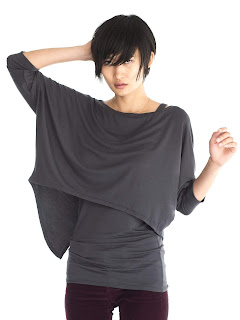
  • Top length: many of the tops are very long for some reason, almost eligible to be considered tunics if you're petite.
  • Sleeve length: I have often needed to either hem long-sleeves or buy items designed to have shorter sleeves. There don't seem to be 7/8 or bracelet length long-sleeve designs for nursing clothes and there are only a couple styles with 3/4 or button-tab rollup sleeves.
  • Fit: many styles are either far too baggy (Undercover Mama has a new plaid print for one of their dresses that I wish they'd use on a design that wasn't just one size!) or surprisingly narrow around the hips.
  • Design: many empire waist designs do not have enough length in the bust portion so they either keep riding up or pulling down the neckline to be too low. Regency era styles are fine in movies but not actually very flattering.
  • Style: ultimately, there just isn't that wide a range.

Solution #2b: Wear nursing tank tops or camisole tank tops as an underlayer

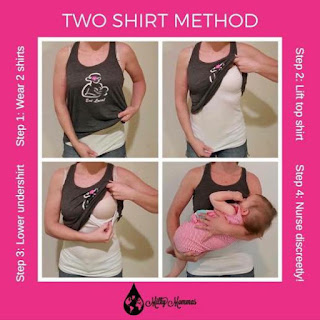
This solution allows for more flexibility in what you wear as the outer layer but keeps your belly covered. You can buy specially designated nursing tank tops; people seem to like the ones at H&M or Target. There's also something referred to in breastfeeding support groups as "the two-shirt trick" where you wear a close-fitting camisole tank top as a tube top (pull the straps under your arms) and another shirt over this setup, like a button-down shirt. Others will use oversized cardigans ("nursing cardigans" are a thing but don't really have a functional difference from regular cardigans). Undercover Mama's tank tops are similar to this but instead of dealing with camisole straps hanging under your arms, you can attach the tank top to your nursing bra. This solution works well as a low cost but flexible option.


 Undercover Mama Basic Strapless Tank  Two-shirt trick

Challenges:
  • Not great to have to wear multiple layers in summer heat.

Solution #3: Look for wrap-style clothing

You can either get true wrap styles or faux wrap styles that might make it easier to pull aside at the neckline. I bought this Laksmi A Line Cap Sleeve V Neck Dress because it has so many good reviews about breastfeeding in it without stretching out the neckline and the neckline is not too low. It comes in different colors and other variations with solid top and patterned skirt.


Challenges:
  • Wrap designs are often too low and expose a lot of cleavage (or in this case, a lot of your nursing bra, which is not really something you would choose to do intentionally for style).
  • I never really feel like I can easily put the wrap ties back in place without a lot of fussing.

Solution #4: buy button-front clothing like shirtdresses and rompers

I forgot that shirtdresses and rompers are a thing! You want styles that unbutton to at least your waist. Avoid styles that mention side or back zippers, since the button-fronts may not be fully functional. I had been searching for short-sleeve buttoned shirts but most of those are more like business wear. Shirtdresses and rompers, on the other hand, come in many colors and prints. I just picked up several from Modcloth.

Read It and Steep Romper in Garden   A Way With Woods Sleeveless Shirt Dress in Fern

Challenges:
  • Especially for rompers, keep an eye out for ones that don't have enough strap coverage for your nursing bra.
  • For similar reasons, avoid racerback styles.
  • Designs need to have enough room in them for the variety of positions you may need to contort yourself into for nursing, so try sitting cross-legged in them.

Maternity for Engineers: Pregnancy

January 1, 2018

Last year I was pregnant and had a baby for the first time! I thought a lot of the resources on pregnancy, giving birth, and parenting could have been better organized, more logical and concise. My husband and I kept semi-joking that what I really wanted was a "Maternity for Engineers" guide. It's less about parenthood specific to someone who works in tech and more just like, "let's drill down into what the core principles to keep in mind are, and be logical."

As far as I know, this doesn't exist yet, and now that some of my close friends are also getting pregnant, I thought I'd start writing out some of it before I forget. This post is what I'll send to my friends if they ask for advice on the pregnancy. If you are interested in "Paternity for Engineers: Pregnancy", I'll refer you to this post The Programmer's Guide to Pairing on Pregnancy.

GETTING PREGNANT

This obviously can be a pretty big topic. To get started, the book Taking Charge of Your Fertility: The Definitive Guide to Natural Birth Control, Pregnancy Achievement, and Reproductive Health is surprisingly accessible and interesting on how female fertility works. There's so much that isn't taught to you at all!

If you decide to start tracking your basal body temperature, the Kindara Wink is a pretty handy device to do so since it syncs to a phone app and does the charting for you.

Finally, lubricant that's formulated to be more sperm-friendly is a thing.


BEING PREGNANT

Congratulations!! Especially in the early weeks, if you're not feeling well, I recommend packing yourself a small kit to bring when you're out and about. Mine included:
  • an air sickness bag that I grabbed from the last flight I was on (just having one on me made me feel more relaxed and less likely to puke in public, I found)
  • saltine crackers and nut butter packets (I found that not getting too hungry was helpful for reducing general nausea)
  • solid perfume in a tolerable scent (my sense of smell got SO strong, I put a little of this right under my nose when I was on public transit as needed)

For the rest...

The number one thing I would recommend to everyone that's going to give birth is to hire a doula. A doula's job is to support you throughout your pregnancy and labor. I was pretty skeptical about doulas at first--even the word sounds pretty hippie to me--but apparently even just having someone (not family) be present in the room during a birth is correlated with fewer medical interventions.

Also, at least some incidences of postpartum depression are due to needing to come to terms with a birth not happening how it had been envisioned. This isn't necessarily from unavoidable medical complications that come up, but rather, feeling like you got pushed around by others when you were in such a vulnerable state. A doula is someone who is on your side and has experience with what's normal to expect or not, who cares about you, but isn't emotionally caught up in everything the way your family and friends would be. You can look for a doula that's a good fit for you in their communication style, presence, and background. I asked for doulas that were well-versed on the science side, and then between the two we were matched up with, I chose the one I just felt really comfortable with in person.

We met ours through a local doula agency and she was so amazing that I hope we'll be able to keep in touch for years to come. She met with us a couple times beforehand and taught us how labor works and what to expect, such that we probably could've skipped some of the birth prep classes. We texted and emailed often when I had questions that weren't quite medical enough in nature to bring to my OB. She helped us figure out the kinds of procedures we might want or not want (the so-called "birth plan", which doesn't have to be a fancy thing and can be just about establishing your preferences ahead of time so that you don't have to make a bunch of decisions during the hecticness of the actual labor). When I went into labor, she came over to our house and coached me through how to cope with the contractions as they got stronger, reminding me of different positions to try. We'd learned and practiced those in one of the classes, but it was really, really helpful to be able to just turn things over to this other person who I felt safe with and trusted their knowledge on labor. She also made sure that neither I nor my husband would tire ourselves out too early from being excited that things were happening.


tl;dr on food & exercise during pregnancy: be healthy, don't fall, and don't get food poisoning.

When I got pregnant, I had the vague sense that you were supposed to read a bunch of books and take some classes for the pregnancy and giving birth. I also had the sense that you have to memorize these long lists of what you're not supposed to eat or drink. The "how are you supposed to do pregnancy well" part was actually simpler than I had expected.

It turns out that healthy habits for a pregnant person are not actually all that different than healthy habits for a non-pregnant person. Doctors won't necessarily make this distinction between what you might have to pay extra attention to specifically because of being pregnant. I think this is because they get used to advising everyone on how to be healthier and some folks might be more motivated during a life change like being pregnant. But if you were already knowledgeable on how to eat well and exercised regularly, there isn't actually that much to change.


FOOD

I was surprised to learn that "eating for two" isn't really a thing. You need more additional calories each day to breastfeed (~500) than you do while pregnant (~300). Listen to your body for when you're hungry and eat to satiation. For the first few months, if you don't have much of an appetite, anything goes. Once your nausea hopefully settles, it's the usual eat vegetables and get enough protein in. You can take supplements like prenatal vitamins and folic acid if you want, but a nutritious diet overall is probably more effective. The benefits to be gained from folic acid are from pretty early on too, like the first 7 weeks, so you might to start this even before you know that you're pregnant.

It's probably a good idea to at least reduce your alcohol and caffeine intake as no one really knows the exact effects of those substances for your particular pregnancy, negative (fetus processing the substances), neutral, or positive (the mother feeling taken care of is good for the fetus). Unpasteurized milk products and soft cheeses, runny eggs, deli meats, sushi--these are things you're told to avoid because in some cases, pregnancy does elevate your risk of getting sick, and when you do get sick, you may not be able to receive the typical treatment. So you can make tradeoffs for yourself based on what you know about the sources of your food.

Added 2023: for my third pregnancy, I discovered the work of nutritionist Lily Nichols and would highly recommend her books, especially if you are at risk for or diagnosed with gestational diabetes. She reviews published research and has a lot of clinical experience for evidence-based recommendations. One caveat though is that it may be harder to get through her book if you are vegetarian or vegan. Here is an Evidenced Based Birth podcast episode interviewing her.


EXERCISE

For exercise, if you were doing something regularly before you got pregnant, doctors feel more reassured that you know what you're doing there. I kept doing weightlifting throughout most of my first trimester but because your body's changing all the time and you don't know what its new limits might be, I was advised not to push with going heavier and therefore switched to other activities because I got bored. Keep moving and don't fall. Doing more sitting on a yoga ball and avoiding driving or reclining back too much during your last trimester is helpful for getting your baby into a better position for an easier labor.

Everyone will recommend swimming and/or prenatal yoga. I have suspicions that some of this is from those sports having a reputation as being much gentler than others and having a cultural practice of treating pregnant women very delicately. Swimming is nice when you're pregnant in the summer and feeling really hot and swollen. Prenatal yoga ended up being more useful than I thought with loosening your hips and getting advice on stretches to soothe the particular aches you might be feeling, especially in the third trimester. Also it was kind of nice to see so many other pregnant women all together.

A less common yet useful recommendation is to consider going to see a pelvic floor physical therapist, even before you give birth. I ended up with a third degree tear, which has healed now, but I might've been able to learn some techniques from a physical therapist beforehand that would reduce the likelihood of having a tear. People often recommend doing Kegels but it turns out that I never really understood what that meant, and a physical therapist could have taught me (plus in my case, it's probably more that I needed to learn how to relax my pelvic floor muscles, not tighten them further).

Finally, when you are tired, take naps if you can. Your body is wisely trying to get you to rest up as much as possible.


BOOKS

Here are the books on pregnancy, giving birth, and the early days with a baby that I would recommend (Amazon affiliate links below):
  • Mayo Clinic Guide to a Healthy Pregnancy: this was recommended to me over the "What to Expect When You're Expecting" series which apparently is a lot more fear-mongering. I liked it, it was nice to have a reference guide on hand for reading about what's happening during different months of the pregnancy.
  • Real Food For Pregnancy, and Real Food For Gestational Diabetes: these are a firehose of information, which I love. Note that they may be frustrating for vegetarians and vegans though.
  • The Birth Partner: this reinforced a lot of the stuff that was in our birth prep class. It's nice to have something for any partners of the pregnant person to read but I took a look at it too. It's well-written and straightforward. Talks about more "natural" birth options without judging for or against them too much.
  • The Nursing Mother's Companion: if you want to breastfeed, this is a good go-to reference to have on hand. I would recommend going to a class first (see below section on classes).
  • If you're at all curious about having a "natural" or unmedicated birth, the person you'll hear a lot about is Ina May Gaskin. She's basically the founder of the midwife revival in the U.S. so her stuff is pretty on the hippie side, but she's got so much experience that it's more trustworthy than I would have initially judged. Her breastfeeding book is good, as is her guide to childbirth, as long as you carry the grain of salt that she's writing about medical practices that are a bit older. At least in the Portland area, even hospital practices are pretty progressive. I enjoyed reading the different birth stories in the childbirth book because they do cover a range of experiences (except scheduled C-sections, I think) but aren't as lengthy as some of the birth stories written up by bloggers. This book also helped me learn why you might want a midwife and/or a home birth, to the point that I would seriously consider those options for the next time around. The best part is taking in the attitude that women's bodies are designed to make giving birth possible and that you don't have to look at giving birth as just a dangerous activity where you do all this extra stuff "just in case" (the common medical attitude).
  • The Science of Mom: A Research-Based Guide to Your Baby's First Year: I loved this book! It was the most actually scientifically rigorous book that I read, because other books purported to be science-based but weren't very good at presenting the research neutrally. This mostly covers decisions to be made post-delivery.
  • The Happiest Baby on the Block: the 1 hour video, not the book. This introduces the concept of "the fourth trimester" and teaches you how to soothe babies in their first few months. Extremely useful.
  • Heading Home With Your Newborn: From Birth to Reality: if you are a first-time parent and don't have much experience caring for babies, this book is a great guide for the actual logistics of caretaking.
  • Birth Day: A Pediatrician Explores the Science, the History, and the Wonder of Childbirth: just an enjoyable memoir by a pediatrician about births. I learned interesting stuff about the history of medicine around childbirth.
  • Great with Child: Letters to a Young Mother: a collection of letters from a mother to a friend of hers that has beautiful reflections on what it feels like to become and be a mom.
I think I'll do a separate post on parenting books at a later point, since I'm working on a couple of ones about Montessori but haven't finished them yet.


CLASSES

We got discounts on a bunch of classes through our doula. The most useful ones were the express birth prep (one 8-hour class rather than several hours one evening for several weeks in a row) and the breastfeeding classes. You might think, breastfeeding is natural, why do you need a class about it? I  have learned a lot about breastfeeding in the last few months but to summarize, I like the phrase "breastfeeding is natural but that doesn't mean easy." If breastfeeding is something that's important to you, it's good to learn about what to do in the early days and how to know if things are going well. Getting support early, preferably from lactation consultants who are IBCLCs and work outside of the hospital, will make a big difference in setting you up for success. I might write a separate blog post about breastfeeding in particular at some point.

It's also a good idea to take an infant CPR class at some point. We took it after the baby had been born because we could bring the baby with us to class. You don't actually practice on your baby that's breathing just fine, but it's kind of nice to have gotten familiar with what holding a real baby is like. On the other hand, having the baby with us also meant that the person who was in charge of the baby at the time missed whatever was being said.


OTHER TIPS

After having your baby, know that the second night is very hard and that's totally normal. Our hospital gave us a packet of informational handouts and it included one about the second night in particular, which we read on...day 3.


You can grab all the supplies in the room, housekeeping will just restock anyway and it's great to have lots of extra, especially all the postpartum items and wipes etc.


Reference guides I made for myself that I should clean up and share: proposed schedule of tasks during pregnancy, reference guide for breastfeeding in the early days and weeks. I'll clean up and share them if anyone asks for them, I suppose.

Unsolicited advice #3: People think it's weird that I go to social events without my partner

July 26, 2017

Original letter at Captain Awkward: #999 “Where’s [Spouse]? Is he avoiding us?”

I am an introvert myself but I am also in a marriage where I tend to socialize on my own pretty frequently. Actually it's only been in the last couple years that I realized the prevalence of the expectation that couples generally go to social things as a unit, even outside of weddings. Anyway, I don't think your setup has to feel awkward nor that you have to cut back on your own outings.

You can stop making excuses for your husband, but there is a middle ground between polite white lies and too much specificity about exactly why he's not there. If people ask where he is, try to take it as though they're politely inquiring that they hope he's well and not that they're insulted that he declined their invitation. You can pull out responses like these:

  • "Oh, he ended up having other plans." (this might sound weird to extroverts but spending quiet time by yourself is a legit plan to introverts)
  • "He wasn't feeling up for it this time, but wanted me to come anyway."
  • "Large parties aren't really his thing, but I'm the opposite and get really energized by getting to hang out with so many people."
Just because people are asking about him not being there doesn't mean that you have to change your marital agreement that "He doesn’t mind if I socialize and I do not care if he takes a pass on 99% of the invitations sent our way." Just be cheerful and matter-of-fact about it. If you're fine with it, it shouldn't matter if other people think it's unusual. I have a brother-in-law who we all know doesn't especially enjoy long extended family events and we all just jokingly describe him as "an indoor cat."

Also, yes, it's not your responsibility to reassure others about whether your husband enjoys their company or not. You can suggest that you all get together for smaller social outings, but really, you only have to convey that you are excited to be there with them. I think the Captain Awkward advice of asking him to stop by for a few minutes to a neighborhood thing every so often is perfectly reasonable, but you don't have to take on the emotional labor for everyone involved. 

Unsolicited advice #2: Should I push through my panic disorder to get married in a church?

July 19, 2017

Original letter from A Practical Wedding.

A panic disorder is not something to push through to make your family and wedding guests happy. Making everyone else happy with the price of you vomiting from anxiety on the morning of your wedding is not a price that any reasonable person who loves you should expect you to go through with, no matter how respectful of tradition anyone wants to be. Nor is it rude to invite folks only to the reception rather than just the ceremony.

However, similar to the response in this letter about eloping and family's reaction to that, you won't be able to control other people's reactions to your decisions. I hope people will be understanding and compassionate, but probably at least some people will not be very considerate or kind. I'm sorry about that. Tradition is legitimate value to have, but when put up to your health, you get to choose your health.

When it comes down to it, when others end up saying, "why can't you 'just' have a church ceremony like everyone else," they are kind of saying, "why can't you just not have an anxiety disorder"...which in a way, is something that you probably have common ground with them on! But wishing the disorder away is not a strategy that's going to succeed. You can be respectful to family that is being pushy about your decision to break from their vision for your wedding, while still having confidence that your choice is the best way to prevent your panic disorder from ruining your wedding: "Yes, I always thought I'd get married in a church as well, traditional weddings are very beautiful. It's not going to work for me. I hope you'll be able to celebrate my marriage with me even if my wedding isn't quite what you're used to."

Unsolicited advice #1: My parents want me to pick a boring, stable career

July 12, 2017

I've been reading advice columns online for quite a long time now. I find them to be a fascinating peek into other people's lives and dilemmas and I've learned a lot from reading about other people's situations and the advice that's given. Of course, sometimes I find myself disagreeing with the advice, or I feel that the advice is from too different a worldview to be as useful as it could be. So, I'm going to try occasionally responding to those letters here instead. This one is from awhile ago that I felt strongly enough about to leave it as a comment.

The original letter is #4 on this Ask A Manager post: "How do I convince my mom to let me pursue the career I want?"

As a first generation Asian-American, and the oldest kid to boot, I feel you. My mom really wanted me to be a doctor and still nags me about going to grad school every so often.

The first thing is, you should accept that it’s unlikely you’ll get your mom to the point of actively supporting and approving of a career in fashion design, “to let you be what you want.” Not saying it’s impossible, just unlikely, and you’ll be better off accepting it straight off rather than having that wishfulness guide your decisions. Spend some time grieving for the movie-perfect family resolution that you’d love to have, and then move on.

The second thing is, as long as you are financially dependent on your parents and/or living with them, your options can be restricted by that. So start earning money to be able to support yourself and move out, and overall it should become easier to arrange your life as you want it, though visits homes can become rather fraught (Captain Awkward’s archives probably have good advice on handling those visits).

Third, if you want to try to set the stage for eventually having a better relationship with your parents, it will help to take a look at the situation from their point of view. Many parents are most motivated by avoiding pain and fear for their children, since that will hit them harder than feeling the benefits from if you succeed and are happy. And they aren’t wrong that with more experience in “the real world,” salary and lifestyle often become more important than trying to get paid for your creative interests. Can you really know that you don’t want to live like your family does now? You may not know until you try it yourself (and I fully support your right to learn that for yourself!), but your mom isn’t wrong for wanting to spare you that, in case it goes poorly. If you can recognize and demonstrate your appreciation for your parents having your best interests at heart, you’ll be able to act more compassionately–even while disagreeing with their worldview and making decisions that they don’t approve of.

Some of your mom’s motivation may be because she wants to be able to brag about your accomplishments to her friends, and they’ll be more impressed by an engineer than a fashion designer. Giving her the benefit of the doubt though, I’d bet that the fundamental thing is that she’s worried about what will happen to you when she’s gone and you don’t have a safety net anymore. Parents generally want their kids to be self-sufficient and independent too!

So, the best strategy imo is to demonstrate how you will in fact be self-sufficient and independent and have thought through the practicalities of your choices, like applying for scholarships, doing research on cost of living, saving every penny you ever earn, working really really hard on your portfolio, talking to them about how you’re demonstrating responsibility, etc. It’s not a bad idea to compromise slightly and double major so you can cover something “practical” and something “for passion” at the same time. You want her to listen to you, but that’s what she’s wanting as well, isn’t it?

Good luck!

(fwiw, my background is that I ended up double majoring in Biology & Psychology and taking extra classes so I could both fulfill my parents’ requirements to continue getting my room & board paid for at college and still taking the “fun” art and psychology classes that I wanted to. Now I work as a software engineer, in a cubicle, and it’s a ton of fun for me, even if my mom still thinks all of our jobs are going to be outsourced some day and that being a doctor is the only real secure job “because people are always going to get sick”–can’t fault her logic there, really. She’s an engineer herself, after all!)


The Sal-gorithm: an algorithm for making delicious salads

August 18, 2016

A few months ago, I decided I needed to solve the problem of often enjoying salad restaurants but being uninspired by the salads I made myself. The Sal-gorithm has worked out very well and simplified lunch decisions when I don't want to make a separate big thing to have as leftovers, as well as help me handle the influx of greens at the beginning of the summer farm share. Some examples of the output in this album.


The way it works is I pick a few items from each of the different categories in constructing grocery lists for the salad, which provides enough variety from week to week. This chart is printed out and on my fridge.

Other tips:
  • If my chosen green is something like kale, then I'll mix it all together, but if there are more delicate items, I might keep those separate and construct right before eating.
  • I have a large stainless steel bowl and set of tongs for tossing the salad with dressing, which is then decanted into the white shallow bowl-like plate. I learned this from a local salad restaurant, because while it's an extra bowl to wash, it gives you enough room to mix everything together but eating from a separate, smaller bowl/plate feels luxurious, rather than just eating from a giant mixing bowl.
  • Some more tips on constructing salad on Serious Eats.


Recommendations for high school students

July 11, 2016

These are articles/books/videos that I feel are particularly helpful to high school students, for whenever I go to speak on career panels and such.

What to work on

"What You'll Wish You'd Known," Paul Graham
I dislike the dismissal of college admissions officers in this essay, but I support pretty much the rest of it. A few excerpts:
I'll start by telling you something you don't have to know in high school: what you want to do with your life. People are always asking you this, so you think you're supposed to have an answer. But adults ask this mainly as a conversation starter. They want to know what sort of person you are, and this question is just to get you talking. They ask it the way you might poke a hermit crab in a tide pool, to see what it does.
...
Right now most of you feel your job in life is to be a promising college applicant. But that means you're designing your life to satisfy a process so mindless that there's a whole industry devoted to subverting it. No wonder you become cynical.
...
Rebellion is almost as stupid as obedience. In either case you let yourself be defined by what they tell you to do. The best plan, I think, is to step onto an orthogonal vector. Don't just do what they tell you, and don't just refuse to. Instead treat school as a day job. As day jobs go, it's pretty sweet. You're done at 3 o'clock, and you can even work on your own stuff while you're there.
"Building Your Inner Coach" (18min TEDx talk), Brett Ledbetter
Focus on building your processes and systems towards your goals and success, rather than just the results themselves.

"Let's Teach Kids to Code" (17min TED talk), Mitch Resnick
People are growing up as tech users, but not necessarily tech builders. You don't have to think of yourself as a "computer person" to give learning to code a try. But perhaps you should think of it as: do you want to give instructions to computers, or only receive them instead? The former gives you more of the thing that all teenagers want, which is: freedom.


Figuring out what you want to do for a career

Career advice from the creator of Dilbert, Scott Adams
1. Become the best at one specific thing.
2. Become very good (top 25%) at two or more things.
...
The second strategy is fairly easy. Everyone has at least a few areas in which they could be in the top 25% with some effort. In my case, I can draw better than most people, but I’m hardly an artist. And I’m not any funnier than the average standup comedian who never makes it big, but I’m funnier than most people. The magic is that few people can draw well and write jokes. It’s the combination of the two that makes what I do so rare. And when you add in my business background, suddenly I had a topic that few cartoonists could hope to understand without living it.
...
Capitalism rewards things that are both rare and valuable. You make yourself rare by combining two or more “pretty goods” until no one else has your mix. 
The book that introduced me to the idea that "follow your passion" advice gets it wrong because your aim should be to get really, really good at something. I like to tell people that things you're looking for are pursuits where you enjoy the process of getting better at it.

How do I choose a career path?
I just took jobs I could get using skills I felt reasonably confident I had (for me, at the start, those were writing and being compulsively organized), and then over the course of doing those jobs, gathered and refined information about what I liked doing and what I was good at and what other people thought I was good at and were willing to let me do more of.
The Secret to Being Happy with Your Job: It's not 'follow your passion'
I figured out that biggest mistake I’d been making was asking “What job would I want?” instead of “What do I want out of my job?” In other words, I needed to shift from statements like, “I want to be a writer,” or “I want to be a fashion designer,” or “I want to run my own business,” to “I want a creative atmosphere,” or “I want to work in a team setting.” Because “I want to be a writer” doesn’t actually mean anything tangible.
...
I like data, so I made a massive list of every workplace quality that had given me joy, and conversely, the ones that made me miserable.
...
After that, I started asking everyone about what moment in their job made it worth it. The most memorable response came from an engineer who said his happened when he “solved the problem.” Not when the product was made. Not when it was delivered. Not when it was sold. Don’t get me wrong, many people listed more than one core moment. But it became clear that I needed more of whatever it was that made me stoked.

Informational interviews

Cold-emailing strangers to ask for career advice: some things that you can do that will make people more likely to want to help you

Actually useful questions to ask in informational interviews: "don’t just focus on being impressive (which is the pitfall a lot of people fall into), but think seriously about what you’re really wondering about"


Doing well at your first jobs

5 Mistakes Smart People Make at Work: These are all good points, especially "if you’re used to being 'the smart one' and things have always come easily to you, you might not have built up the skills you need for when things are hard."

What Your Internship Manager Wishes You Knew: all good, especially:
  • "Working an internship is different from being in school"
  • "college often rewards lengthy explorations of a single topic. In the work world, shorter is nearly always better"
  • "Effort is nice, but it’s not what matters" 
A roundup of other relevant Ask a Manager posts for new grads.

15 things you don’t know about work when you’re early in your career: again all good points, especially:

  • "I’m the only person who’s fully immersed in my own day-to-day work, and I have to speak up when I want my boss to fix something."
  • "leaders are far more interested in how you plan to fix the issue vs. who was responsible for causing it."
  • (misconception that) "If a process or tool doesn’t work the way an employee thinks it should, it must be broken and in need of fixing. In a lot of situations where this came up, the employee didn’t have (and didn’t seek out) any background on why we did things the way we did, and just assumed management must be idiots. In reality, there were nearly always valid (and sometimes legal / regulatory) reasons why things worked the way they did."
  • (misconception that) "If I see something I perceive to be a problem and report it, my work is done and someone else will fix it."


Other

The UpSide of Down, Megan McArdle
Megan McArdle have been my favorite bloggers to read for several years now, I just like her writing and argument style a lot, and it's informed how I think about things, even if I don't always agree with her. Anyway, this is her book about failure and why it is necessary yet difficult to accept as a part of improving over time.